Systems Built to Run a Business
Vikentis Design designs and ships production software — SaaS platforms, operations systems, and the integrations they depend on. One team, from the first database schema to a signed installer.
Numbers From One Project
Everything below comes from a single platform we designed, built and still maintain.
Software Beyond the Website
Most studios stop at the front page. We build the part that has to survive real staff, real money and real downtime.
SaaS Platforms
Multi-tenant products with accounts, roles, licensing and tenant-scoped data. Billing hooks, feature flags and audit trails — the parts that decide whether a product can actually be sold.
Operations Software
Booking engines, front-desk workflows, point of sale, inventory, rosters, attendance and payroll. The software a shift manager uses for eight hours without opening a manual.
Regulated Integrations
Fiscal and tax authority bridges, VAT handling, invoice grading, PIN-gated overrides and immutable audit logs. When a regulator is watching, “it mostly works” is not a deliverable.
Identity & Documents
Passport and ID capture, MRZ parsing, OCR across several alphabets, mobile scan sessions and a verification vault. Replace the clipboard at reception with a two-second scan.
Channels & Hardware
Channel managers and partner APIs with sandbox modes, two-way sync and reconciliation. Card payments, thermal printing, serial devices and scanners — wired, not theorised.
Desktop & Offline
Electron applications that keep working when the connection doesn’t. Local database, crash-safe writes, background sync, signed installers and licence enforcement.
Case Study: Vikentis One
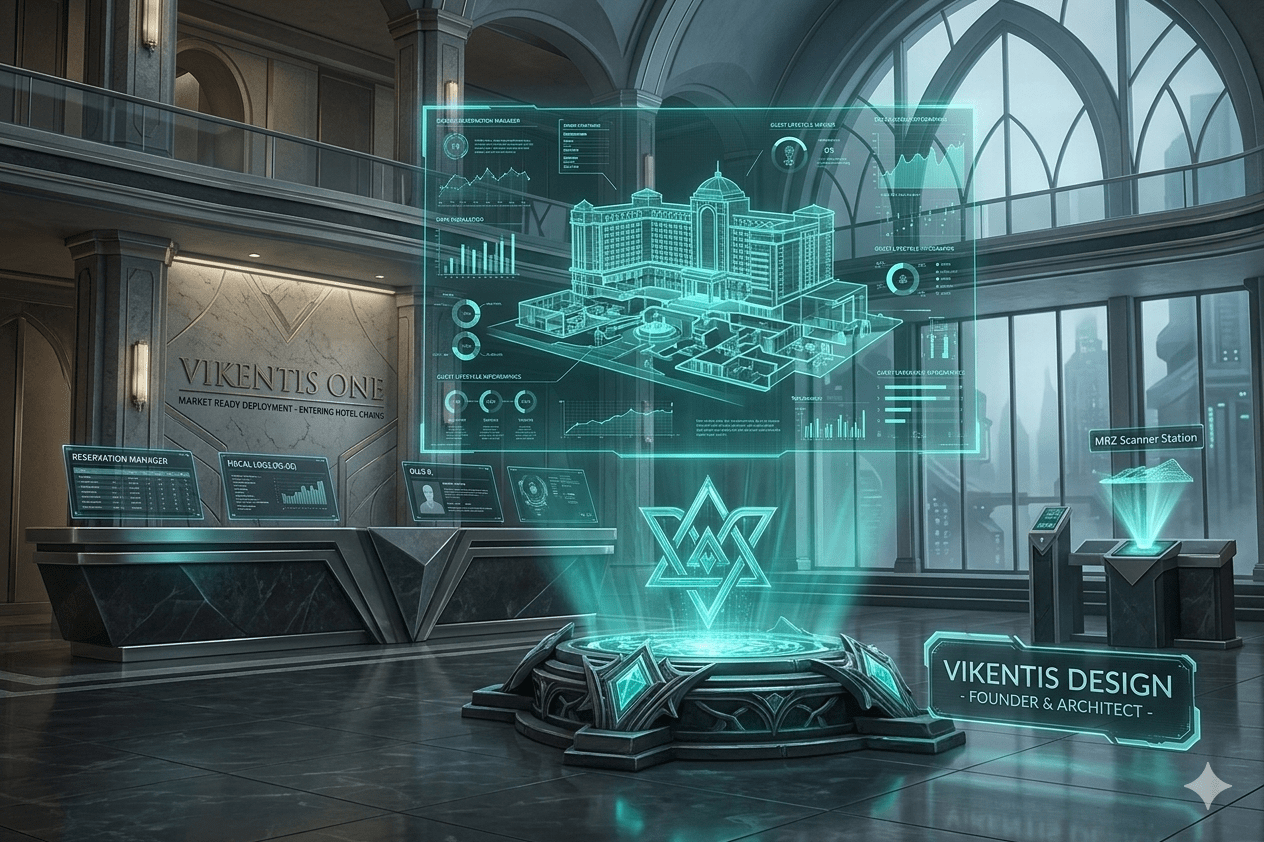
A complete hotel PMS and restaurant POS in one desktop application — built, hardened and maintained by a single engineer over 24 months. Front desk, bookings, housekeeping, concierge, warehouse, point of sale, kitchen display, rosters, attendance, leave, payroll, invoicing, payment slips, channel manager, internal chat and an email client. Passport scanning with MRZ extraction, a mobile capture app, and a live fiscal bridge to the Georgian revenue service. Local-first, so a dropped connection never stops service.
No Open-Ended Discovery
You should know what you are paying for before the first line is written.
Scope
A short call, then a written specification: screens, data model, integrations and what is explicitly out of scope. You approve a document, not a mood.
Build
Weekly working increments you can click through, not status reports. Decisions that touch your operations are raised while changing them is still cheap.
Harden
Automated tests on the critical paths, permission checks, error handling, offline behaviour, packaging and signing. This is why software survives its first month.
Handover
Source code, schema, documentation, credentials and a walkthrough with whoever will run it. No lock-in, no hostage dependencies.
Small Builds & Full Products
Scoped and priced per project — from a single workflow to a system that replaces three vendors.
One Workflow
- A single tool, integration or automation
- One internal screen or one data sync
- Fixed scope, fixed price
- Typical: an approval flow, a booking widget
A Product
- Accounts, roles, billing, admin panel
- Database design and migration path
- Deployment, licensing and packaging
- Typical: a vertical SaaS ready for customers
A System
- Several modules on one foundation
- Hardware and regulatory integrations
- Ongoing maintenance and releases
- Typical: an operations platform replacing vendors
Chosen Per Project, Not Per Fashion
What Clients Ask First
Can you take over an existing project?
Yes. We start with a paid audit: what exists, what works, what is fragile, and what it would cost to make it maintainable. You get that as a written document whether or not you continue with us.
Who owns the code?
You do, on final payment. Source, schema, documentation and deployment credentials are transferred to you. We keep no private branch.
Do you work fixed-price?
Small and platform engagements are fixed-scope and milestone-billed once the specification is signed. Longer programs run monthly with a defined release cadence.
Will you sign an NDA?
Yes, before the first detailed call if you prefer. We can also work from a written brief if you would rather not share the business context yet.
What time zones can you work with?
We are in Tbilisi (UTC+4), which covers the full European working day and the morning of the US East Coast. Calls are scheduled in your hours.
What happens after launch?
Either a handover with training, or a maintenance agreement covering fixes, dependency updates and small changes. Both are fine — it depends whether you have a technical team.
Tell Us What You’re Building
A paragraph is enough to start. We will tell you honestly whether it is a two-week job, a six-month platform, or something you should not build yet.
Send your brief through the contact page, or write to [email protected].
Usually answered within one business day.

